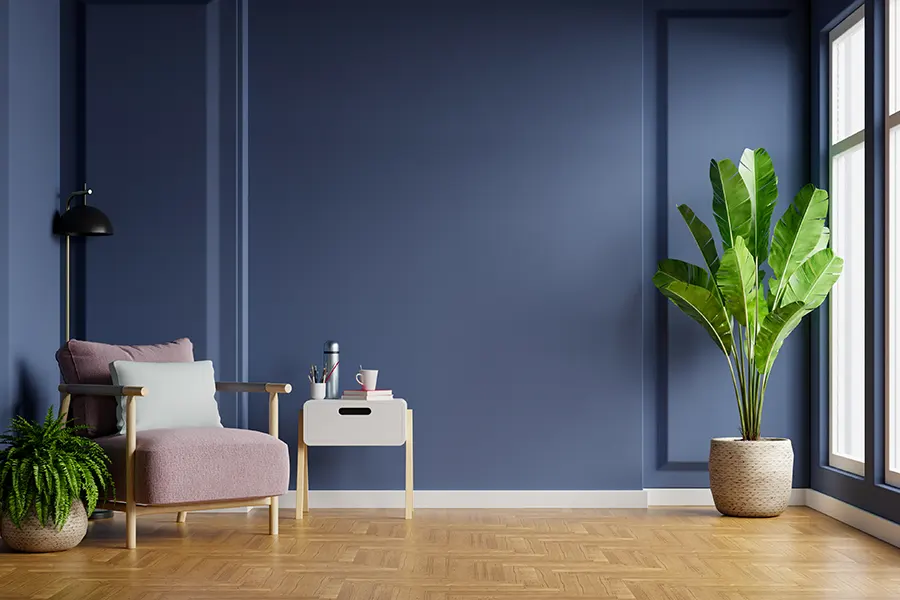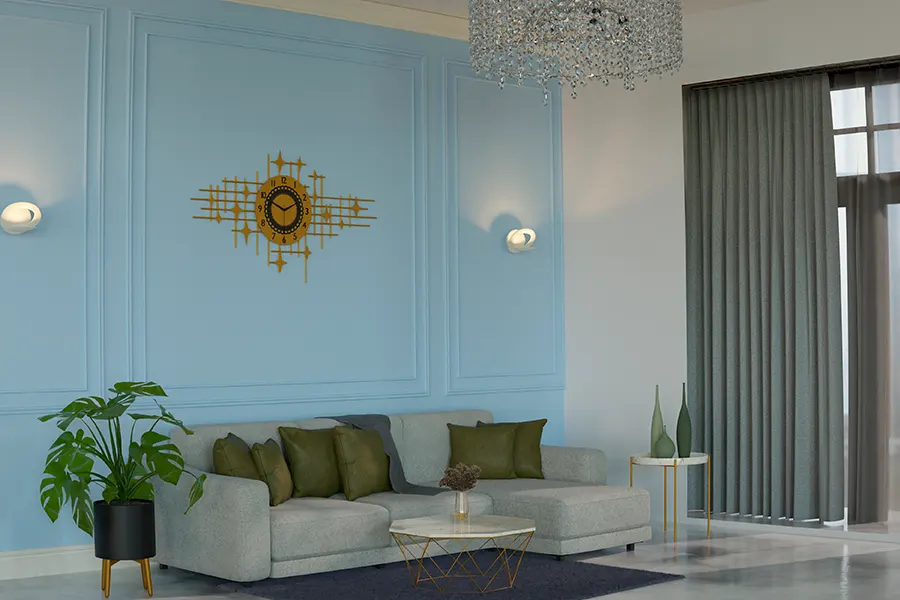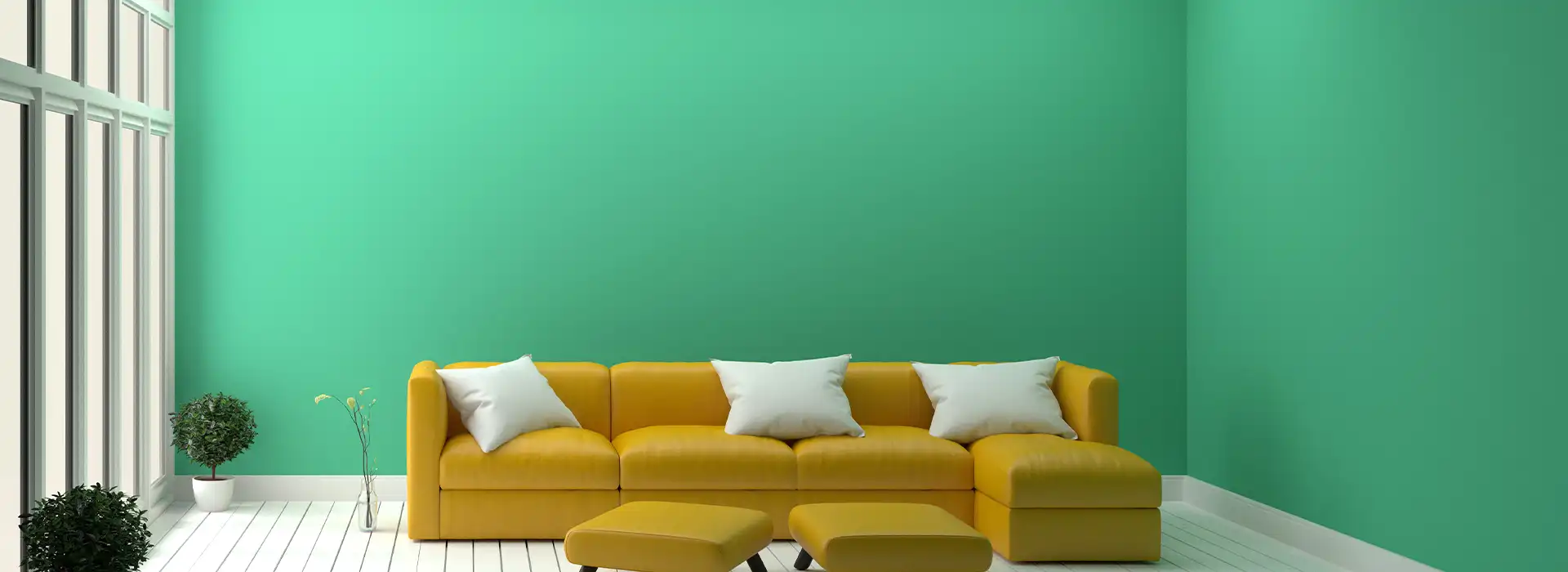
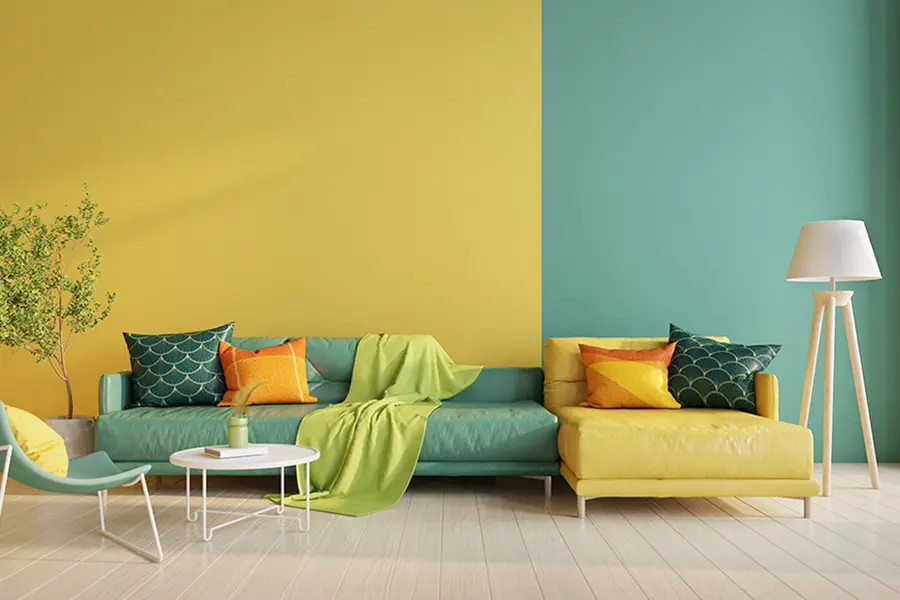
Most people spend weeks choosing a colour and thirty seconds choosing a finish. Yet sheen level decides how the colour actually reads on the wall, how forgiving the paint is of imperfect plaster, and whether a scuff in the hallway wipes off or stays for years. Get the finish right and an ordinary colour looks considered. Get it wrong and the best shade on the card looks flat, patchy or unpleasantly shiny.
What sheen actually means
Sheen is simply how much light the dried film reflects. That figure is governed by the ratio of pigment to binder in the formulation. More pigment scatters light and produces a matt surface; more binder produces a smoother, harder film that reflects light directly and reads as gloss.
That same ratio drives everything else. A higher-binder film is tighter, so it resists moisture and repeated cleaning better, which is why gloss and satin finishes are durable and washable. A matt film is more porous and more easily marked, but it scatters light in all directions and therefore hides undulations, patch repairs and minor plaster defects that a gloss finish would highlight.
Matt: for ceilings, bedrooms and imperfect walls
A matt emulsion such as Durashield Acrylic Matt gives a soft, non-reflective, contemporary surface. It is the most forgiving finish available, which makes it the right answer for older walls, uneven plaster and large flat expanses where side light would expose every ripple.
Use it on ceilings, in bedrooms, and in formal living and dining rooms where colour depth matters more than scrubbing. Its weakness is cleanability: heavy scrubbing can burnish the surface and leave a shiny patch. Keep matt away from high-traffic corridors and children's play areas unless you are happy to touch up occasionally.
Silk and satin: the practical middle ground
A silk or satin emulsion such as Durashield Acrylic Silk carries a low, gentle sheen. It cleans far better than matt, resists moisture better, and brings a subtle glow that makes colours look richer without turning the wall into a mirror.
This is the workhorse finish for family homes: hallways, stairwells, children's bedrooms, kitchen walls away from splash zones, and rented properties where surfaces need to survive wiping. The trade-off is honesty. Silk reflects enough light to reveal poor surface preparation, so it rewards proper filling and sanding beforehand.
Gloss and enamel: for trim, joinery and hard use
High-sheen finishes belong on the surfaces that take physical contact rather than on broad walls. Durolite Enamel Gloss on doors, window frames, skirting, railings and grilles gives a hard, washable, moisture-resistant film that stands up to repeated handling. Where a softer look is wanted on the same joinery, Durolite Enamel Satin and Durolite Enamel Matt provide the same enamel durability at lower sheen.
Wooden elements deserve their own chain. Prime with Durolite Wood Primer, or protect exposed timber with Durolite Woodshield, before applying the finish. Skipping the primer on joinery is the usual reason enamel work looks tired within a couple of years.
A quick room-by-room summary
Ceilings and bedrooms suit matt. Hallways, stairs and children's rooms suit silk. Kitchens and bathrooms suit silk or satin for their moisture and cleaning resistance. Doors, frames, skirting and metal trim suit gloss or satin enamel. Feature walls can go either way: matt deepens dark, saturated colours, while a decorative finish such as Artistical Glaze or Pearl turns the wall into the focal point of the room.
Two details that decide the result
First, prepare the surface to match the sheen you have chosen. The higher the gloss, the more preparation the finish demands, because it will amplify whatever is underneath it. A PVA Primer on new or porous plaster evens out absorption so the topcoat dries to a uniform sheen instead of patching.
Second, test in the room itself. Sheen behaves entirely differently under north light, under warm artificial light and at night. Paint a generous sample area, live with it for a day, and judge it at the hours you actually use the room.
Need help choosing?
Durolac has made decorative and protective coatings since 1987, and our team advises on colour and finish selection every day. Browse the interior emulsion and enamel ranges, or contact us with your room, its light and its traffic level, and we will help you match the right sheen to the right surface.